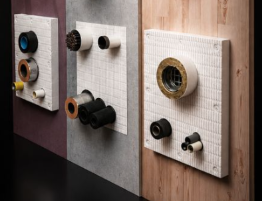
Flamro Firebreather Cavity Barrier: Fire Protection for Rear-Ventilated Facades
Flamro Firebreather Cavity Barrier: Fire Protection for Rear-Ventilated Facades
When it comes to fire safety, the smallest unprotected cavity can create a significant risk. In modern construction, building envelopes and facade systems can contain concealed cavaties that require effective fire protection to help prevent the spread of fire and smoke.
For rear-ventilated facades and other complex building evelope applications, the Flamro Firebreather Cavity Barrier provides a purpose-designed solution.
What is the Flamro Firebreather Cavity Barrier?
The Flamro Firebreather is a cavity barrier designed for use within rear-ventilated facade systems. It combines stainless steel mesh with high-performance intumescent technology to provide fire protection within ventilated cavities.
In the event of a fire, the intumescent material reacts to heat and expands, helping to close the cavity and restict the passage of fire and hot gasses.
The system is designed to provide fire resistance of up to EI90, subject to the specific tested application and installation requirements.
Why are cavity barriers important?
Cavaties within facade systems can provide a concealed route for fire to travel. Without appropriate compartmentation, fire and hot gasses can portentially spread through these concealed spaces, allowing fire to move beyond its point of origin.
Cavity barriers form an important part of the overall fire strategy by helping to interrupt these pathways.
For designers, specifiers and contractors, selecting a suitable cavity barrier is therefore an important consideration when developing or installing a rear-ventilated facade system.
Key features of the Flamro Firebreather
The Firebreather combines severeal features intended to make it suitable for modern facade applications:
- Fire resistance up to EI90, depending on the tested configuration
- Stainless steel mesh construction
- High-performance intumescent technology
- Designed for rear-ventilated facade systems
- Straightforward installation
- Designed as a maintenance-free passive fire protection solution once correctly installed
The combination of the mesh and intumescent materials allows ventilation during normal conditions while providing a mechanism to close the cavity when exposed to the temperatures associated with a fire.
Installation and specification
As with all passive fire protection products, correct specification and installation are essential. The performance of a cavity barrier depends on the complete tested system, including the substrate, cavity dimensions, fixing method and installation arrangement.
The Firebreather should therefore be selected and installed in accordance with the manufacturer's technical documentation and the requirements of the relevant tested application.
For projects involing rear-ventilated facades, it is important to consider cavity barriers as part of the wider fire strategy rather than as an isolated product choice.
Fire protection from the inside out
At Blazeout, we understand that passive fire protection is about more than simply supplying products. Contractors, installers and specifiers need solutions that are suitable for the application, supported by the appropriate technical information and available when they are needed.
As an approved distributor of the Flamro range, Blazeout can supply a selection of Flamro fire protection products, including cavity barrier solutions such as the Firebreather.
Whether you're working on a new-build project, refurbishment or facade installation, our team can help you explore the available options for your requirements.
Looking for a cavity barrier solution?
If you're reviewing your facade fire strategy or looking for a suitable cavity barrier for a rear-ventilated facade, get in touch with Blazeout discuss your requirements and the Flamro Firebreather range.