What is the Difference Between Intumescent Sealant and Fire Rated Foam?
When it comes to maintaining the fire integrity of a building, choosing the correct firestopping product is essential. Two of the most commonly used products are intumescent sealant and fire rated foam. While they may appear to perform similar functions, they are designed for different applications and understanding the difference is key to achieving a compliant firestop installation.
What is Intumescent Sealant?
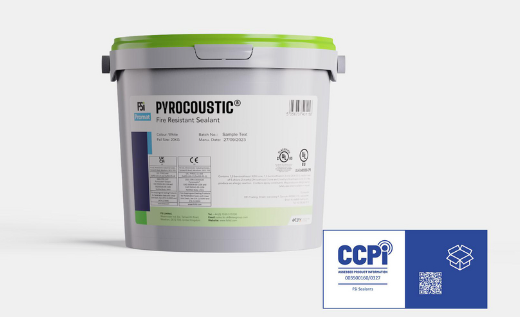
Intumescent sealant is a fire-resistant acrylic sealant that expands when exposed to high temperatures. As the heat from the fire increases, the sealant swells to fill gaps and openings, helping to prevent the passage of flame, smoke and hot gasses through fire-rated walls and floors.
It’s commonly used for:
· Sealing linear joints between walls, floors and ceilings
· Firestopping service penetrations around cables, cable trays and metal pipework
· Perimeter sealing around fire-rated doors, windows and partitions
· Applications where movement or flexibility mat be required
What is Fire Rated Foam?
Fire rated foam is a specialist expanding polyurethane foam designed to provide both fire resistance and excellent gap-filling properties. Unlike standard expanding foam, fire rated foam that has been tested for use within passive fire protection systems and can help maintain the fire performance of compartment walls or floors when installed in accordance with the manufacturer’s tested details.
It’s typically used for:
· Filling larger voids around service penetrations
· Sealing gaps around doors and window frames
· Filling irregular openings in masonry or concrete
As with all firestopping products, it is essential that the manufacturers guidelines and tested details are followed explicitly.